Pure metal baseline
Gold Melt Value Calculator
Calculate the value of the pure gold content in jewelry, scrap gold, and karat gold before buyer deductions.
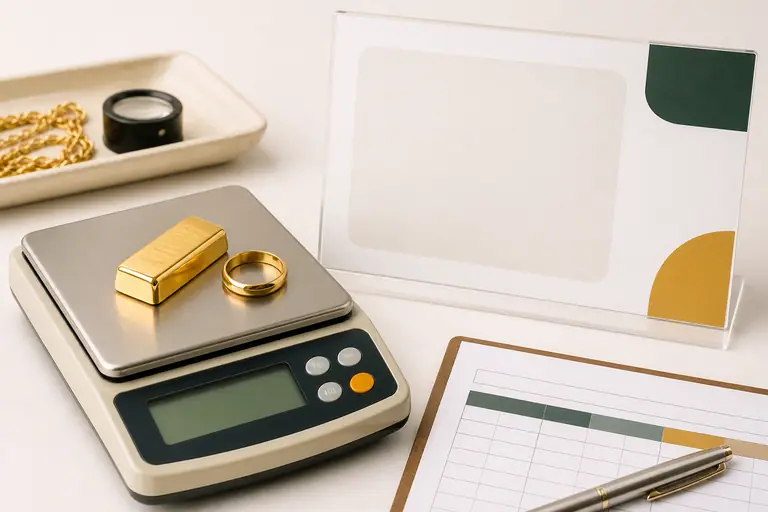
Live calculator
Estimate gold value by weight and karat
Karat price board
Live gold price per gram
| Karat | Purity | Price / gram | 10g melt value |
|---|---|---|---|
| 24K | 99.9% | Loading price | Loading price |
| 22K | 91.6% | Loading price | Loading price |
| 21K | 87.5% | Loading price | Loading price |
| 18K | 75.0% | Loading price | Loading price |
| 14K | 58.3% | Loading price | Loading price |
| 10K | 41.7% | Loading price | Loading price |
| 9K | 37.5% | Loading price | Loading price |
| 8K | 33.3% | Loading price | Loading price |
Values use troy-ounce market pricing. One troy ounce equals 31.1034768 grams.
Melt value explained
Melt value is the pure metal baseline
A gold melt value calculator estimates recoverable gold content before buyer deductions, resale premiums, or appraisal value.
Melt value strips the item down to metal math. It ignores design, retail markup, brand, stones, and sentimental value, which makes it useful for broken jewelry, plain karat gold, and scrap lots.
The formula is fine gold grams multiplied by pure gold price per gram. Buyer offers can be lower because testing, assay, refining, shipping, minimum fees, and margin still have to be handled.
Guide
Find the raw metal baseline that buyer offers can be compared against.
What melt value means
Melt value is the estimated value of recoverable gold content. It ignores the design, brand, gemstone value, sentimental value, and retail markup of the item.
This makes melt value useful for scrap gold, broken jewelry, and plain karat items that are likely to be refined.
Melt value formula
The formula is weight in grams divided by 31.1034768, multiplied by spot price per troy ounce, multiplied by purity. The calculator shows the same logic in plain terms so the result can be checked.
For one troy ounce of 24K gold, the melt value should be close to the spot price. For 14K jewelry, the result is lower because only about 58.3 percent of the weight is pure gold.
Melt value versus offer value
A buyer may offer less than melt value because the buyer needs to test, refine, insure, ship, and resell or process the gold. The difference between melt value and buyer offer is the payout spread.
Use melt value as the benchmark, then decide whether convenience, speed, and buyer trust justify the payout percentage.
Why melt value is the cleanest baseline
A gold melt value calculator strips the question down to recoverable metal content. It does not try to price a brand, a diamond, a watch movement, a collectible coin premium, or a retail jewelry markup.
That makes melt value useful when you want a neutral baseline before talking to a pawn shop, local jeweler, refiner, or cash-for-gold service. The buyer may pay less, but the baseline should be visible.
Fine gold grams explained
Fine gold grams are the grams of pure gold inside the item. Ten grams of 18K gold has 7.5 fine gold grams. Ten grams of 14K gold has about 5.83 fine gold grams. Ten grams of 10K gold has about 4.17 fine gold grams.
Once you know fine gold grams, the rest of the math is direct. Multiply fine gold grams by the pure gold price per gram, which comes from the live spot price divided by one troy ounce in grams.
Assay, melt loss, and refining settlement
Professional refiners may use assay results instead of the stamped karat. If the assay shows lower purity than the stamp, the settlement may be lower. If the lot is cleaner or higher purity than expected, it may be better.
Small lots can also face minimum fees, shipping costs, or handling spreads. These business realities explain why a melt value calculator should not promise the exact amount a refiner will pay.
When melt value can mislead
Melt value can mislead if the item is gold plated, gold filled, heavily stone-set, hollow with non-gold cores, or part of a watch. It can also understate value when the item has collector demand or strong resale appeal.
Use melt value for metal math, then decide whether the item belongs in a scrap sale, a jewelry resale quote, a coin dealer evaluation, or a formal appraisal.
Melt value example with payout comparison
For a 10 gram 14K item, the fine gold weight is about 5.83 grams. If the live pure-gold price per gram were $130, the melt value would be about $757.90 before any buyer payout. A 60 percent offer would be about $454.74, while an 85 percent offer would be about $644.22.
The exact dollar numbers change with live spot price, but the relationship stays the same. Weight, purity, and spot price create melt value. Buyer payout percentage turns melt value into a likely cash offer.
That difference is useful during negotiation. Instead of only saying the offer feels low, you can say the quote represents a specific percentage of calculated melt value and ask whether the deduction comes from testing, refining, stones, or shop margin.
When the item has several parts, calculate only the payable gold weight if you can identify it. A ring with a large stone, a watch with a steel movement, or jewelry with non-gold inserts can show a higher gross weight than the actual meltable gold.
Gold melt calculator and scrap melt searches
Some users search gold melt calculator instead of gold melt value calculator. Others search scrap gold melt value calculator because they are preparing a selling lot. The calculation is the same: payable weight, purity, live spot price, and buyer payout.
This page keeps melt value separate from the cash offer. That distinction matters because a scrap buyer may use assay results, deduct non-gold weight, and pay a percentage of melt rather than the full metal value.
FAQ
Common questions
Is melt value the same as spot price?
No. Spot price is for one troy ounce of pure gold. Melt value applies that price to the actual weight and purity of your item.
Does melt value include refining fees?
No. Melt value is before buyer deductions, refining costs, and margin.
Can melt value be higher than a pawn offer?
Yes. Pawn shops and other buyers commonly offer less than melt value.
Should I sell designer jewelry for melt value?
Not without checking resale value. Designer or collectible jewelry can be worth more than melt value.
What are fine gold grams?
Fine gold grams are the pure gold portion of the item weight after applying karat purity.
Does assay change melt value?
Yes. If professional testing finds a different purity than the stamp, the recoverable gold content and payout can change.
Can I use melt value for gold coins?
You can estimate metal value, but collectible or bullion premiums may make a coin worth more than melt.
Why do refiners not always pay 100 percent of melt?
They may deduct refining costs, assay costs, shipping, insurance, minimum fees, and margin.
Is a gold melt calculator useful before selling scrap?
Yes. It gives the pure metal baseline before a buyer applies testing, refining, and margin deductions.
Does scrap gold melt value include buyer payout?
No. Melt value is before payout deductions. Use the buyer estimate panel to model a possible cash offer.
GoldCalc provides spot-based estimates for educational and planning purposes. Actual buyer offers can vary based on testing, weight deductions, refining costs, local market conditions, gemstones, brand value, and buyer margin.