Worth check

Gold Value Calculator

Estimate what your gold is worth today by weight and karat, then compare melt value with likely buyer payout ranges.

Live spot price ready Karat purity math Pawn and refiner estimates
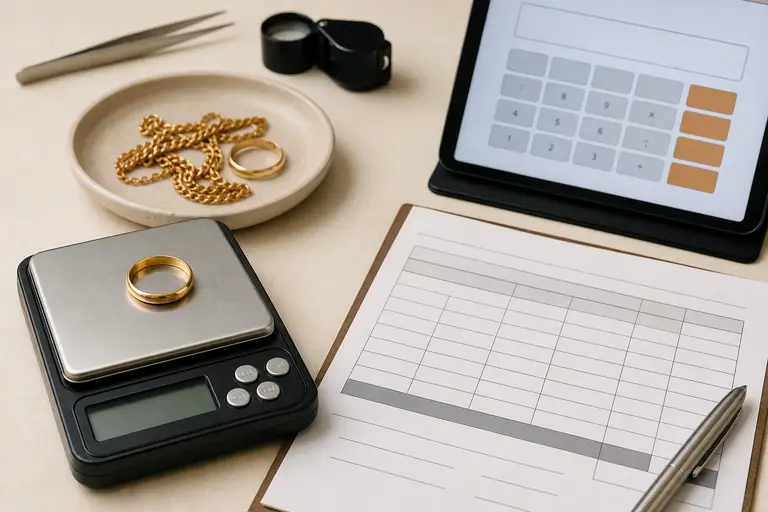
Gold jewelry on a digital scale for live gold value calculation

Live calculator

Estimate gold value by weight and karat

Loading price
Adjustments
Spot price$4,200/ozt
Applied purity75.0%
FormulaWeight x purity x spot/g

Karat price board

Live gold price per gram

KaratPurityPrice / gram10g melt value
24K99.9%$134.90$1,349
22K91.6%$123.69$1,237
21K87.5%$118.15$1,182
18K75.0%$101.27$1,013
14K58.3%$78.72$787.24
10K41.7%$56.31$563.09
9K37.5%$50.64$506.37
8K33.3%$44.97$449.66

Values use troy-ounce market pricing. One troy ounce equals 31.1034768 grams.

Live API credentials are not configured yet. The calculator remains usable with fallback pricing.

Worth check

How much is my gold worth right now?

A gold value calculator answers the broad selling question by separating metal value, buyer payout, and possible resale value.

For plain jewelry or scrap, the most objective starting point is melt value: payable weight multiplied by gold purity and live gold price. That gives a clean baseline before any buyer margin.

Some pieces need more than melt value. Designer jewelry, antique pieces, collectible coins, and items with valuable stones may deserve resale or appraisal checks before being sold only for gold content.

Baseline Metal value Weight, karat, and spot price create the first number.
Selling route Offer value Buyer payout converts melt value into possible cash.
Appraise when Brand or stones Resale value can be higher than scrap value.
Best question What % of melt? Percentage makes different quotes easier to compare.
Search intent

The real user question is not only scrap price

A gold value search often starts with uncertainty: is this ring only worth its gold content, or could it be worth more as jewelry? That is why this page should not read like a scrap-only page.

The first answer is melt value because it is objective and quick. The second answer is the selling route. Plain broken jewelry may belong in a scrap sale, while signed jewelry, antique pieces, coins, watches, and stone-set items may need resale or appraisal checks before any cash offer is accepted.

Checklist

Choose the right valuation path

  • Use melt value when the item is plain, broken, unmatched, or clearly being sold for metal.
  • Check resale value when the item has a designer mark, vintage demand, collectible coin premium, or fine workmanship.
  • Ask for an appraisal when gemstones, watches, estate jewelry, or insurance value may matter.
  • Use buyer payout only after deciding the item should be compared as gold content rather than retail jewelry.
Example

Value decision example

A plain 14K chain with a broken clasp can be valued mainly by gold content. The calculator gives a melt value, then a buyer payout percentage turns that baseline into a likely cash offer.

A signed 18K ring with a center stone is a different problem. The melt value is still useful as a floor, but it should not be the only number. A jewelry buyer, estate specialist, or appraiser may value the design, brand, and stone separately.

Gold jewelry being weighed to estimate how much it is worth
Use melt value as the first number, then decide whether the item needs resale evaluation.

Guide

Answer the broad user question: how much is my gold worth right now?

Start with the metal value

The simplest reliable floor is metal value: weight, purity, and current gold spot price. This calculator gives that floor before you decide whether the item belongs in a resale, appraisal, insurance, or scrap conversation.

For example, 10 grams of 18K gold contains 7.5 grams of pure gold. That metal floor is useful even when the final value depends on brand, condition, setting, age, or gemstone quality.

When gold can be worth more than melt value

Some items should not be sold as scrap without a second opinion. Designer jewelry, antique pieces, collectible coins, and jewelry with valuable stones may have resale value above melt.

If the item is plain, damaged, mismatched, or broken, melt value is often the most practical starting point.

Build a value range, not one final number

A single dollar number can hide the real decision. A plain broken item may sit near its metal floor, while a wearable estate piece may have a resale range above the metal floor. A collectible coin or signed jewelry piece can require a different market altogether.

Use the calculator to set the floor, then decide whether the item needs a jewelry buyer, appraiser, estate specialist, coin dealer, or simple metal buyer.

What users mean by how much is my gold worth

The phrase how much is my gold worth can mean several things: metal floor, jewelry resale value, estate value, coin premium, gemstone value, or insurance-style appraisal. A good answer starts with metal content but should not stop there when the item has visible resale signals.

This page is meant to help users place an item in the right value category. Plain damaged jewelry can be checked quickly by metal content. Signed, antique, collectible, or stone-set pieces may need a broader valuation path.

Jewelry value versus metal value

Metal value comes from weight, purity, and live gold price. Jewelry value can also include craftsmanship, designer brand, stones, rarity, condition, and demand from retail buyers. A plain broken chain may be a scrap item, while a signed ring may deserve an appraisal.

If you are unsure, calculate the melt value first. Then compare that baseline with an estate jeweler, resale platform, or appraiser before accepting a scrap-only offer.

Handling unknown purity

A missing or worn stamp is common on older jewelry. Do not assume 14K or 18K just because the color looks right. Gold color can be affected by alloy metals, plating, cleaning, and wear.

If the item has no reliable stamp, use a conservative custom purity or wait for professional testing. Acid tests, electronic testers, and XRF testing can produce different confidence levels, so ask how the buyer verified karat.

Signals that the item may need appraisal

Look for designer signatures, hallmarks from known makers, unusual period styling, matching sets, collectible coin dates, fine watch cases, and gemstones that may have their own market. These signals do not guarantee extra value, but they are enough reason to avoid treating the item as ordinary scrap immediately.

Condition also matters. A wearable piece with intact settings and current demand can have a different path from a crushed or incomplete item. Use the metal estimate as the floor, then decide whether a jeweler, estate buyer, appraiser, or specialist marketplace should review it.

Practical example for how much gold is worth

Imagine two 14K bracelets both weigh 20 grams. The first is a plain broken chain with no stones and no brand mark. The second is a signed estate bracelet in wearable condition. Their metal floor may be similar, but the right value path can be very different.

The broken chain can be compared mainly by gold content. The signed bracelet should be checked for maker, condition, style, demand, and resale route before it is reduced to metal only.

That is why this page separates the quick floor from the broader worth question. Users searching how much is my gold worth need a fast number, but they also need a way to avoid undervaluing the wrong type of item.

When gold value is an appraisal question

Some searches for gold value are really appraisal searches. A stamped designer ring, vintage bracelet, signed brooch, collectible coin, luxury watch, or estate piece can have value from condition, maker, scarcity, craftsmanship, and market demand. Melt value is still useful, but it may be only the floor.

If the item has gemstones, get a stone-aware evaluation before treating the gross weight as gold. Diamonds, colored stones, watch movements, enamel, pearls, and unusual settings can change the right selling route. The calculator helps you know the metal floor before that separate evaluation.

Build a value range before choosing where to sell

A useful gold value workflow creates a range instead of one final number. The low end can be a fast cash buyer percentage of melt value. The middle can be a competitive local jeweler or estate buyer quote. The high end may be private resale, auction, or appraisal-based value when the item has demand beyond metal.

This range keeps the decision practical. A plain broken chain may not justify appraisal time, while a signed 18K ring might. The point of this page is to help users decide which path fits the item before they accept a scrap-only quote.

Gold value calculator by weight

People searching gold value calculator by weight or how much is 14K gold worth usually know an item weight or can weigh it, but they need the value translated by karat.

A by-weight estimate is strongest when the weight excludes stones and non-gold parts. For 14K, 18K, and 10K jewelry, the calculator turns gross weight into pure gold grams before applying the live spot-based price.

FAQ

Common questions

What information do I need to value my gold?

You need the weight, unit, karat or purity stamp, and current spot price. The calculator handles the conversion and purity math.

What if my gold has no stamp?

Use the calculator cautiously and get the item tested. Without a verified purity, the estimate can be too high or too low.

Does this value include diamonds?

No. The calculator estimates gold metal value only. Gemstones and brand value require separate appraisal.

How often does my gold value change?

It changes whenever the gold spot price changes. Buyer payout rates can also change by buyer and market conditions.

Is my gold worth the full melt value?

Not usually when selling to a buyer. Melt value is the metal baseline, while offers often subtract costs and margin.

Can gold jewelry be worth more than melt value?

Yes. Designer pieces, collectible items, and jewelry with valuable stones can have resale value above metal value.

What if my gold is stamped 375, 585, or 750?

375 is usually 9K, 585 is commonly 14K, and 750 is 18K. Use the matching karat if the stamp is trustworthy.

How many quotes should I get before selling gold?

For higher-value lots, compare at least two or three buyers and evaluate each quote as a percentage of melt value.

How much is 14K gold worth by weight?

Multiply the 14K price per gram by the payable gold weight. The calculator does this automatically after converting the item weight and applying 58.3 percent purity.

How much is 18 karat gold worth by weight?

18 karat gold is 75 percent pure gold. Enter the weight and choose 18K to estimate the melt value before buyer payout.

GoldCalc provides spot-based estimates for educational and planning purposes. Actual buyer offers can vary based on testing, weight deductions, refining costs, local market conditions, gemstones, brand value, and buyer margin.