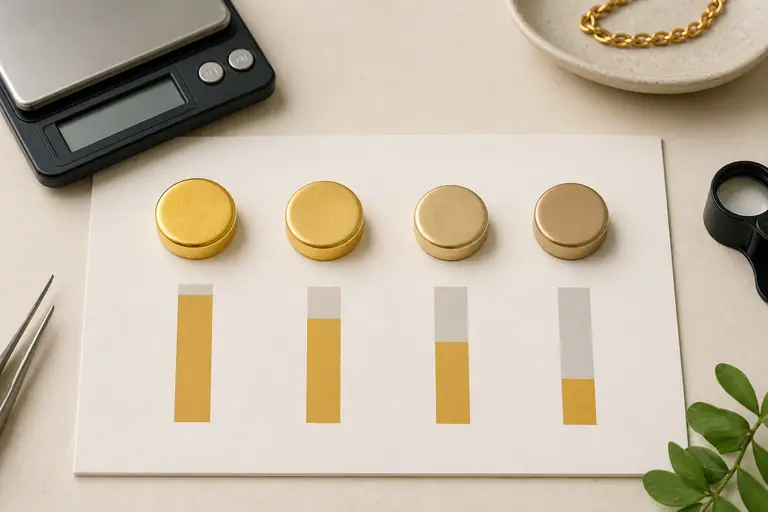
Pure gold quick answer
24K is the price reference for pure gold
The 24K gold price per gram is the pure-gold baseline behind karat jewelry, bullion melt value, and per-gram comparisons.
Users searching this phrase often want the live value of pure gold, not a broad jewelry calculator. That may mean a 1 gram bar, a .999 fine item, gold grain, or a reference rate before checking 18K, 14K, and 10K jewelry.
This page keeps 24K selected by default and explains the difference between spot price per troy ounce, pure gold price per gram, and the final buy or sell price after premiums or buyer spread.
Purity .999 fine Common practical model for 24K gold.
Default unit 1 gram Useful for bars, grain, and price-per-gram checks.
Best for Pure gold Bullion and high-purity items, not mixed jewelry.
Excluded Premiums Dealer spread and collectible value are separate.
Search intent Why 24K should be its own page
The broad gold price per gram page compares multiple karats. A 24K page answers a narrower and more commercial question: what is pure gold worth per gram today?
That narrower angle lets the content cover 999 fine marks, bullion premiums, and the way 24K becomes the reference point for calculating lower-karat jewelry values.
Checklist Check before using 24K value
- Look for marks such as 24K, 999, 999.9, or fine gold.
- Do not price 18K, 14K, or 10K jewelry as 24K just because it is yellow gold.
- Remember that bullion bars and coins can trade above melt because of premiums.
- Use buyer payout only when modeling a sell offer below melt value.
Example Pure gold estimate example
A 1 gram 24K bar should be close to the live pure-gold price per gram. A 10 gram 24K bar should be close to ten times that number before any dealer spread.
If a buyer offer is lower than the melt estimate, buyer payout shows the discount as a percentage. If a retail seller asks more than melt, the difference is usually premium, spread, shipping, or tax.